Lost in Translation: Closing the Gap Between SDG Language and the Communities You Actually Serve
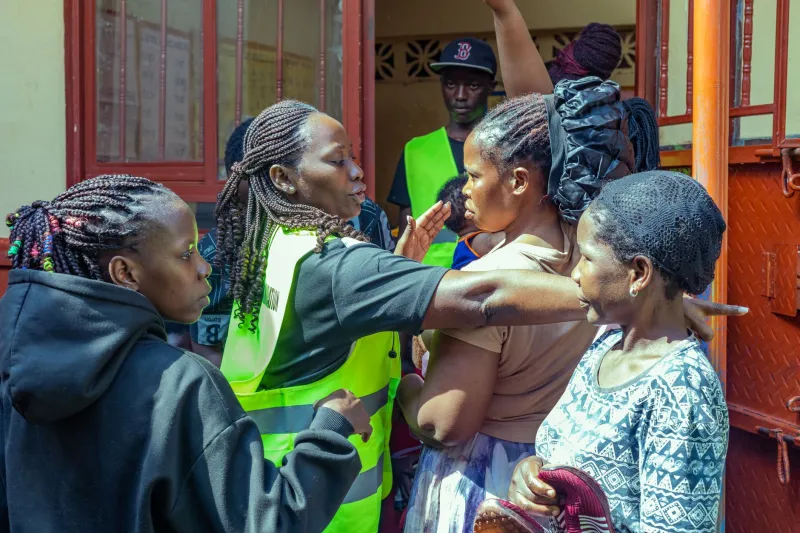
There is a particular kind of silence that settles over a room when a corporate representative begins talking about "multi-stakeholder partnerships for SDG 17 alignment" at a community meeting in, say, Akron or Baton Rouge. It is not a hostile silence. It is something closer to polite bewilderment—the look people wear when they sense that something important is being said in a language they were never taught.
This is the SDG translation problem, and it is quietly undermining some of the most well-funded sustainable development efforts in the country.
The UN's 2030 Agenda is a genuinely ambitious framework. Its 17 goals address challenges that communities across the United States feel acutely: food insecurity, unaffordable housing, inadequate healthcare access, crumbling infrastructure, and widening economic inequality. The substance of the SDGs is not foreign to local stakeholders. The packaging, however, often is.
Why the Language Gap Exists
Organizations typically encounter the SDGs through one of two entry points: international reporting frameworks or peer benchmarking among large corporations. Both contexts reward a specific kind of vocabulary—precise, globally standardized, and legible to institutional audiences like investors, NGO partners, and UN reporting bodies.
That vocabulary serves a real purpose in those contexts. The problem arises when organizations carry it, unchanged, into conversations with local school boards, neighborhood associations, small business coalitions, or municipal governments. Terms like "leaving no one behind," "resilient infrastructure," and "inclusive institutions" are not inherently obscure, but when deployed without translation, they can feel abstract at best and condescending at worst—as though the organization is narrating a documentary about the community rather than speaking with it.
The irony is sharp: the SDGs exist precisely to center the needs of people and places that have historically been excluded from global decision-making. Using inaccessible language to describe that mission undermines the mission itself.
The Cost of Jargon Is Not Just Aesthetic
Some leaders treat the communication challenge as a branding issue—a matter of messaging polish rather than strategic substance. That framing underestimates the stakes.
When local stakeholders cannot connect an organization's SDG commitments to their own lived experience, several things happen. Community trust erodes. Participation in programs drops. Potential local partners—the churches, unions, schools, and civic groups that actually hold social infrastructure together—decline to engage. And the organization loses the feedback loops it needs to course-correct when implementation goes sideways.
In practical terms, jargon-heavy SDG communication tends to produce what researchers sometimes call "performative alignment": organizations that can articulate their SDG commitments fluently in annual reports but struggle to demonstrate that those commitments have changed anything on the ground. The words travel; the impact does not.
What Authentic Translation Actually Requires
Translating SDG language for local audiences is not a matter of simplification. It is a matter of relevance. The goal is not to dumb down the concepts but to reconnect them to the specific concerns, histories, and vocabularies of the people you are trying to serve.
That requires several deliberate moves.
Start with the community's own language, not the UN's. Before crafting any public-facing SDG communication, conduct genuine listening sessions with local stakeholders. Ask them to describe the challenges they face in their own words. You will almost certainly hear the substance of multiple SDGs—concerns about job quality, water safety, educational opportunity, neighborhood safety—articulated in the idiom of lived experience. That idiom is your translation guide.
Name the local stakes explicitly. "SDG 3: Good Health and Well-Being" means something abstract until it is connected to the fact that the county you operate in has a maternal mortality rate three times the national average, or that the nearest pediatric specialist is 90 miles away. Specificity is not a communications tactic; it is evidence that you have actually paid attention.
Replace institutional framing with relational framing. Organizations tend to describe their SDG work in terms of programs, metrics, and deliverables. Communities tend to think in terms of relationships, reciprocity, and trust. Reframing your SDG commitments around what you are willing to be accountable for—and to whom—shifts the conversation from announcement to covenant.
Involve local voices in the translation itself. The most durable SDG communication is co-created with community members rather than delivered to them. This might mean partnering with local journalists, community colleges, faith leaders, or youth organizations to develop materials that reflect how people in that place actually talk about the issues your work addresses. It also means being willing to let go of some of the language you brought to the table.
The Risk of Over-Correction
It is worth naming a failure mode on the other side of this challenge. In attempting to speak accessibly, some organizations strip their SDG commitments of all structural content—reducing complex systemic goals to feel-good slogans that carry no accountability and make no demands. "We believe in community" is not a translation of SDG 11. It is an evasion of it.
Authentic translation preserves the strategic intent of the original framework. It makes the goals legible and relevant without making them vague. The test is whether a community member who engages with your SDG communication comes away understanding not just that you care, but what you are specifically committing to do, by when, and how they can hold you to it.
A Note on Posture
Underlying all of this is a question of organizational posture. The SDG translation problem is, at its root, a power problem. Organizations that treat communication as a one-way act of explanation—where they hold the framework and the community receives it—will struggle to close the language gap no matter how carefully they revise their talking points.
Organizations that approach local SDG work as genuine co-creation—where the community's knowledge, priorities, and vocabulary shape the work itself, not just its presentation—will find that translation happens more naturally. When people see their own concerns reflected in your commitments, they do not need a glossary.
The SDGs were designed to be universal. Making them local is the work. And that work begins not with a communications strategy but with a willingness to listen long enough that you actually learn how the people you serve describe the world they want to live in.
That is not a soft skill. It is the foundation of implementation that lasts.