Who Gets to Define Success? The Case for Putting Measurement Power in Community Hands
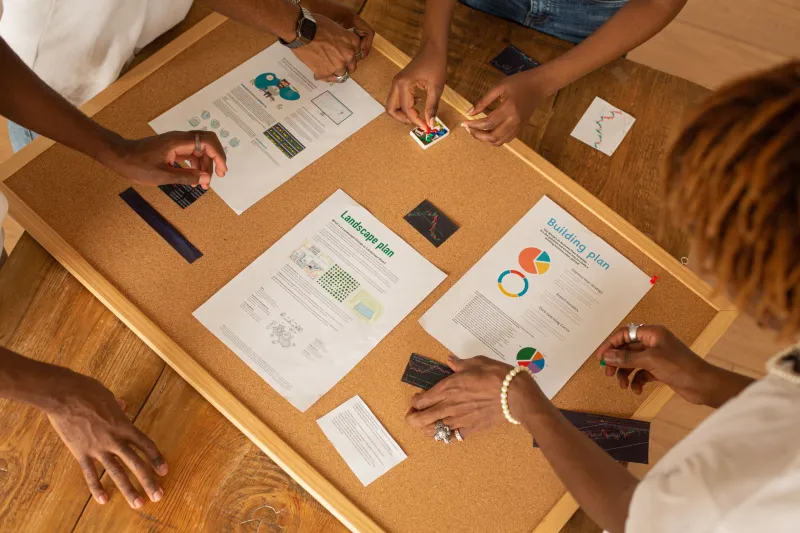
Let us be honest about what most community engagement in SDG work actually looks like. An organization designs a program, establishes its metrics, builds its reporting infrastructure, and then—at some point before launch, often late in the process—hosts a community meeting. Residents are invited to share their perspectives. Staff take notes. Some feedback is incorporated. The metrics, however, do not fundamentally change. The organization still decides what success means.
This is consultation. It is not co-design. And the distinction matters enormously—not as a point of procedural ethics, but as a practical question about whether the measurement system you build will actually tell you whether anything important changed for the people you are accountable to.
The Problem With Holding the Pen
When organizations retain exclusive authority over metric design, they introduce a systematic bias that no amount of good intention can fully correct: they measure what they already know how to measure, and they define success in terms that are legible to their own reporting structures.
This is not a critique of competence. Program staff are often genuinely skilled at measurement design. The problem is that their expertise is situated—shaped by professional training, funder expectations, organizational history, and the conceptual frameworks of the SDG field itself. That situatedness is not neutral. It tends to produce metrics that reflect institutional priorities rather than community experience.
Consider what this means in practice for SDG Goal 1 (No Poverty) work in a mid-sized American city. An organization might measure success through income thresholds, employment rates, and housing stability—all legitimate indicators. But residents of the community in question might define economic security primarily through the lens of debt relief, access to credit without predatory terms, or the ability to weather a single emergency without losing housing. These are not the same outcomes. An organization measuring the first set can achieve strong results while the conditions described in the second set remain unchanged.
The community's definition of security was never captured because the community was never asked to design the measurement framework. They were asked to participate in a program whose success criteria had already been determined.
Consultation Theater and Why It Persists
The gap between genuine co-design and consultation theater is not always the product of organizational bad faith. It persists for structural reasons that are worth naming clearly.
First, metric co-design takes time that program timelines rarely accommodate. Funders want programs launched on schedule, and genuine community deliberation about what outcomes matter—and how to measure them—requires multiple conversations, translation across different frameworks of understanding, and the willingness to let the process produce unexpected results. Most program development calendars do not include that kind of space.
Second, community-defined metrics sometimes produce outcomes that are difficult to quantify in ways that satisfy funder reporting requirements. If a community says that success means feeling safer walking to school, measuring that experience requires different methodologies than counting incidents in a police database—and those methodologies may not be accepted by the organizations funding the work.
Third, there is an implicit power asymmetry in most SDG program relationships that organizations rarely examine directly. The entity with resources defines the terms. Community members participate because participation gives them access to something they need. Challenging the measurement framework can feel like a risk to that access. The asymmetry produces silence that organizations frequently mistake for agreement.
What Genuine Measurement Co-Design Looks Like
Authentic metric governance—as opposed to consultation—requires transferring real decision-making authority, not just expanding the feedback process. This is a meaningful organizational commitment, and it looks different from anything most US SDG practitioners currently practice.
Start the measurement conversation before the program exists. Before any theory of change is drafted, convene community members to discuss the problem as they experience it. Ask what a meaningful improvement would look, feel, and function like in their daily lives. Use their language, not your framework, as the starting vocabulary for measurement design.
Create formal governance structures with actual authority. A community advisory board that can be thanked and ignored is not governance. Genuine co-design requires bodies with the explicit power to reject proposed metrics, require modifications, and approve or withhold approval of the final measurement framework. This means organizational leadership must be willing to accept outcomes from that process that they did not anticipate.
Diversify what counts as evidence. Professional measurement cultures tend to privilege quantitative data, standardized instruments, and statistically significant sample sizes. Community members may identify qualitative shifts—in social trust, in collective efficacy, in how institutions treat them—as the most meaningful evidence of change. A co-designed measurement system must be capable of capturing and honoring that evidence, even when it is harder to aggregate.
Pay community members for measurement labor. Co-design is work. Attending meetings, reviewing draft frameworks, participating in data collection, and providing ongoing feedback all require time that community members—particularly those in low-income communities targeted by SDG programs—may not be able to donate. Compensating this labor is not a courtesy. It is a prerequisite for equitable participation.
The Workforce Dimension
Shifting measurement authority toward communities also has significant implications for how organizations recruit, train, and develop their program staff. The skills required to facilitate genuine co-design—cultural humility, comfort with ambiguity, fluency across different epistemological traditions, and the ability to hold space for community deliberation without steering it—are not standard features of most SDG practitioner training.
Organizations serious about this shift need to invest in staff development that goes beyond data literacy and logic model construction. They need practitioners who understand power dynamics in community relationships, who can recognize when a process is producing genuine consensus versus manufactured agreement, and who have the professional security to bring back a measurement framework that looks nothing like what their organization originally proposed.
This is, ultimately, a workforce and talent question as much as a program design question. The organizations that lead on community metric governance in the coming years will be those that have deliberately built teams capable of doing this work with integrity.
Relinquishing Control as Organizational Maturity
There is a version of SDG work in which organizational expertise is the primary asset, and community members are the beneficiaries of that expertise. That version is increasingly inadequate—not because organizational expertise is worthless, but because it is insufficient on its own to produce the kind of accountability that genuine SDG implementation demands.
The communities that SDG programs are designed to serve are not passive recipients of well-designed interventions. They are the authorities on whether their lives have improved. Treating them as such—giving them genuine power over the question of what success means—is not a concession to political pressure. It is the most rigorous methodological choice an organization can make.